Parent Resources
How to make a LENA recording
Your child wears a vest with a small pocket that holds the LENA recorder. LENA counts how much language your child hears and uses over the day.
How to record
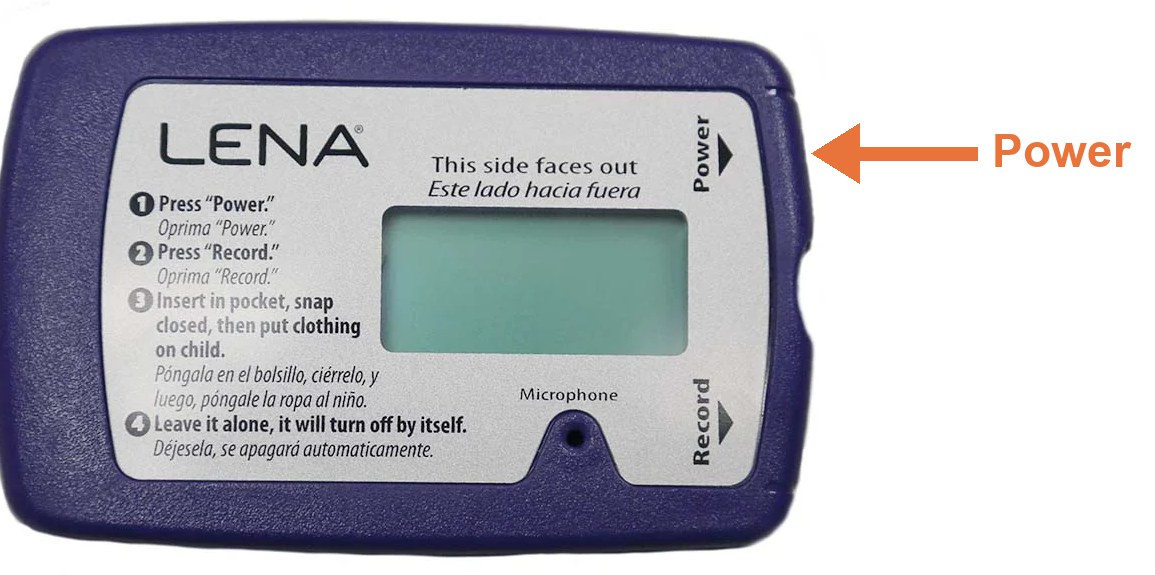
1. Press and hold the Power button for 3 seconds.
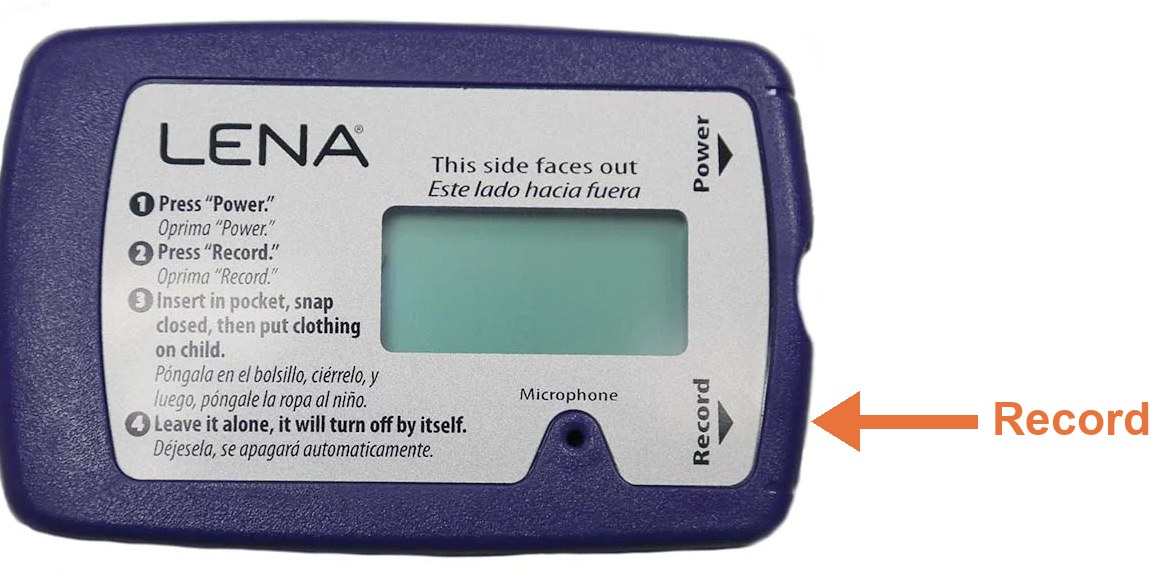
2. Press and hold the Record button for 3 seconds.
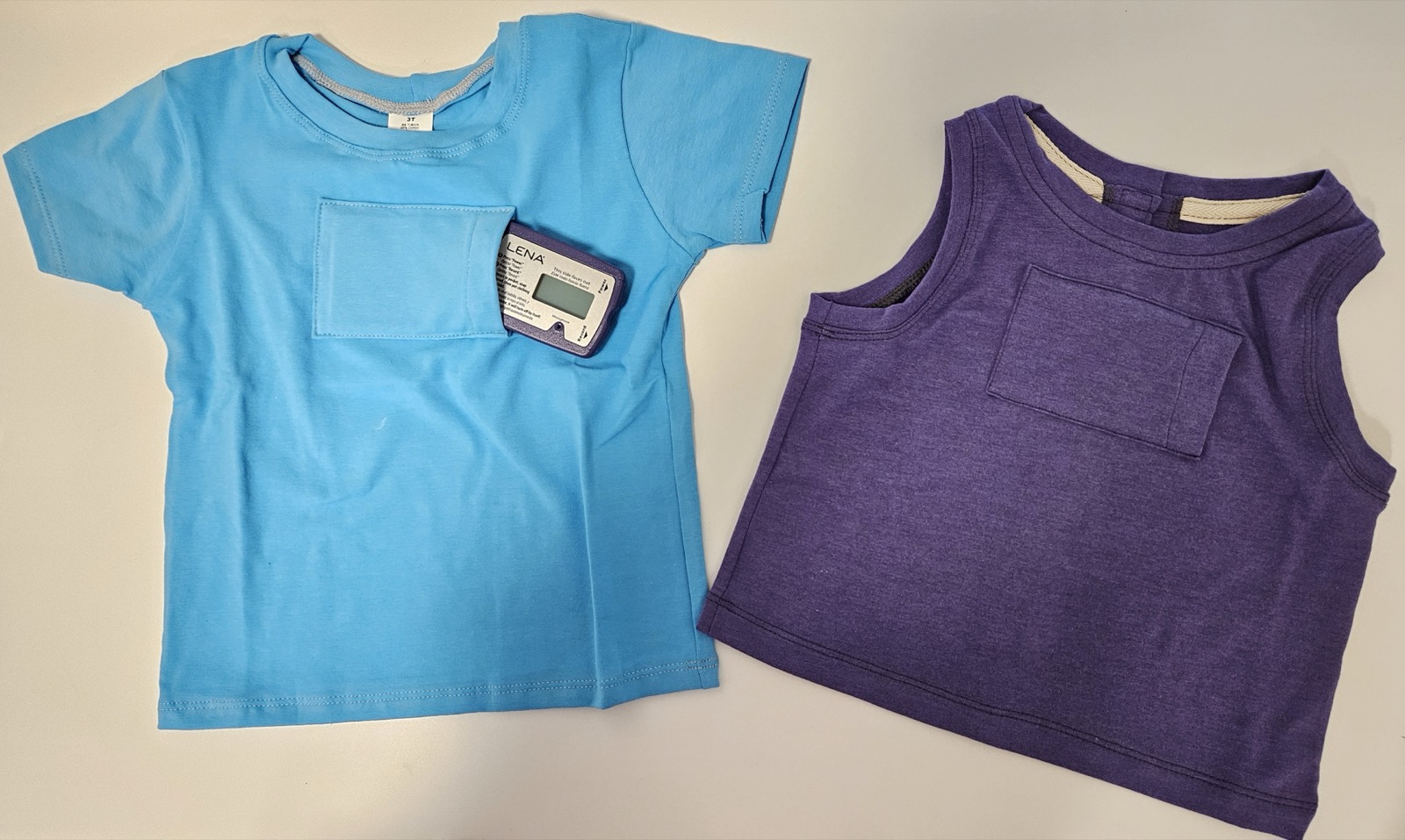
3. Put the recorder in the vest pocket with the silver side facing out, snap it closed, and put the vest on your child.
4. Leave it on. The recorder turns itself off after 16 hours.
Take the vest off when your child goes in water (bath, pool) or goes to bed for the night, and keep it nearby so you can put it back on in the morning.
Skip recording on days when your child is sick in bed, or spends most of the day at daycare, school, a party, or playing sports outside. Any ordinary day at home is a good day to record.
How to read your LENA report
After a recording day, we send you a report about your child's language environment. It shows:
- Adult words: how many words adults spoke around your child that day.
- Conversational turns: back-and-forth exchanges between your child and an adult.
- Child vocalizations: how much your child vocalized, including babbling, words, and other sounds.
The report includes hourly breakdowns and comparisons to other children the same age. Our team can walk you through the results and help you set goals.
Educational library
Guides and fact sheets for families of children who are d/Deaf or hard-of-hearing.
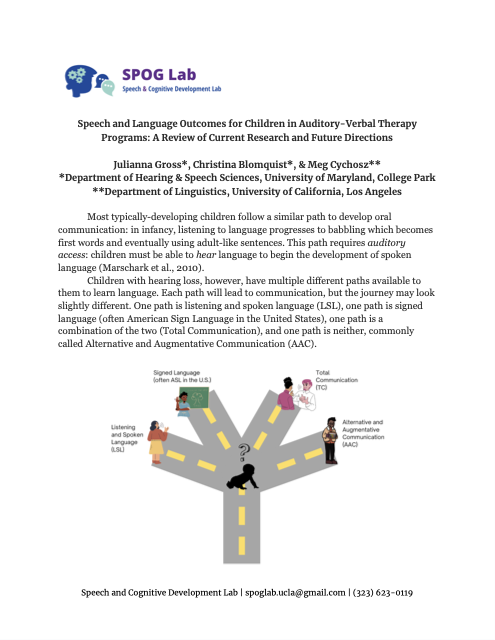 Auditory-Verbal Therapy Outcomes (research review)
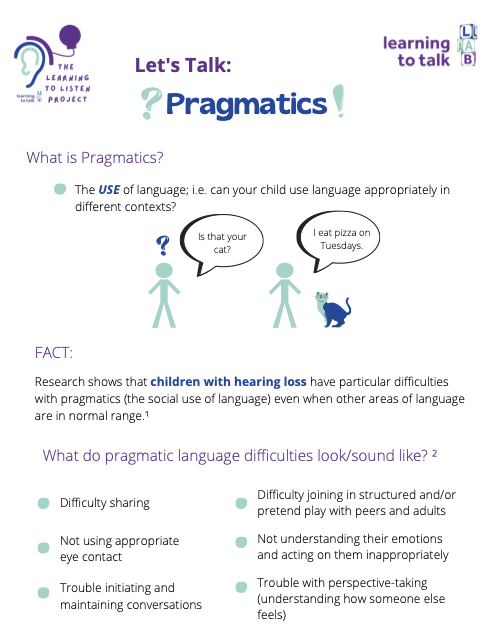 Guide to: Pragmatics
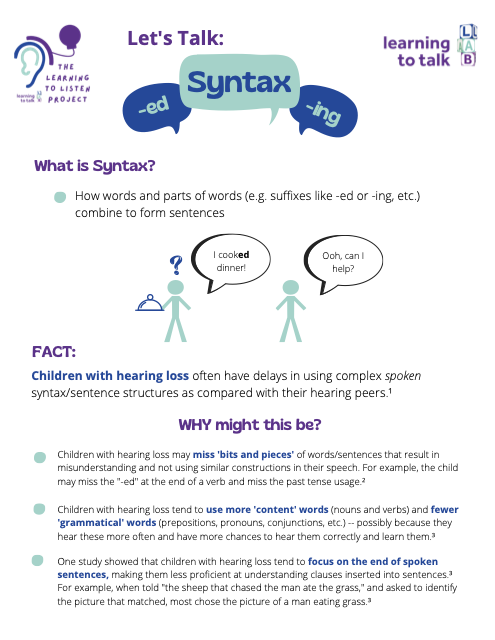 Guide to: Syntax
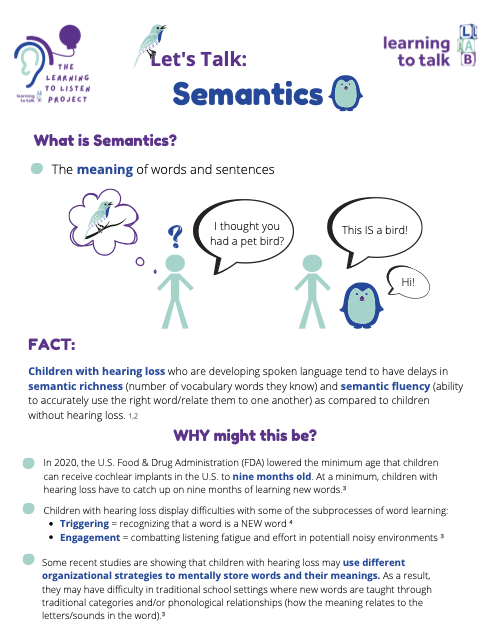 Guide to: Semantics
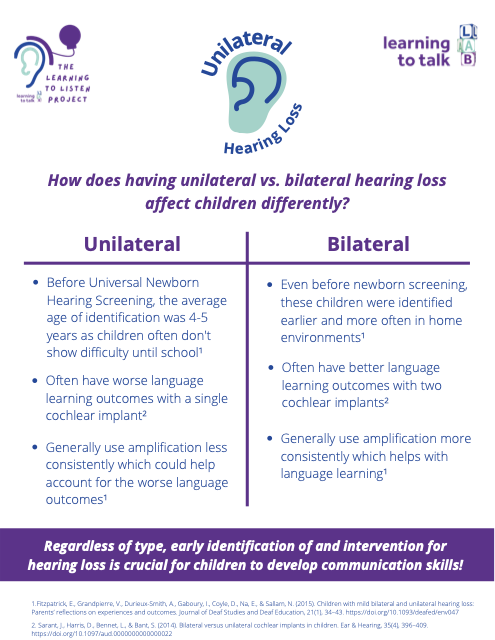 Unilateral Deafness
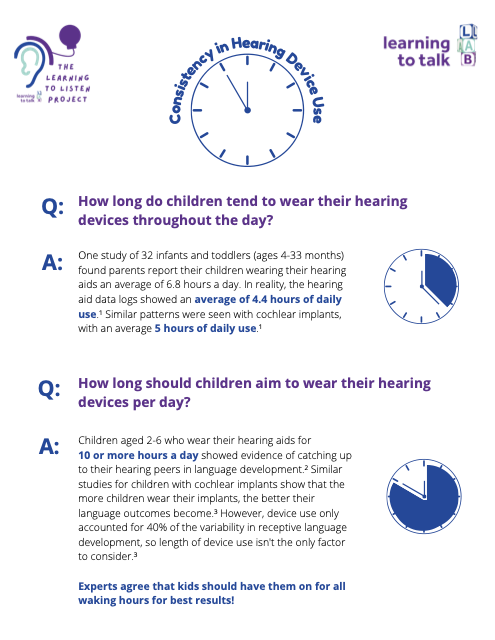 Consistency in Hearing Device Use
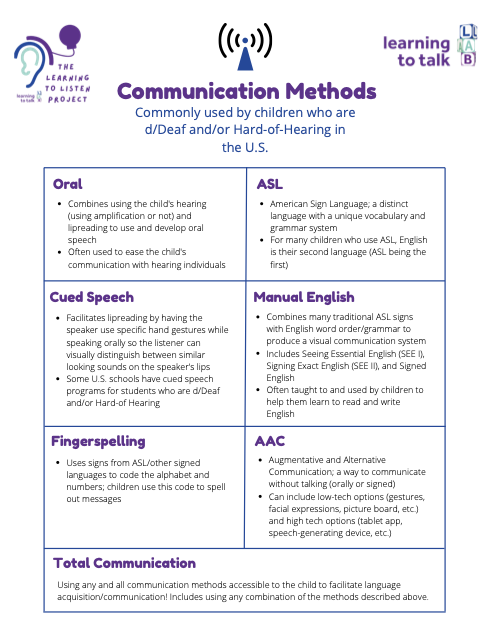 Communication Methods
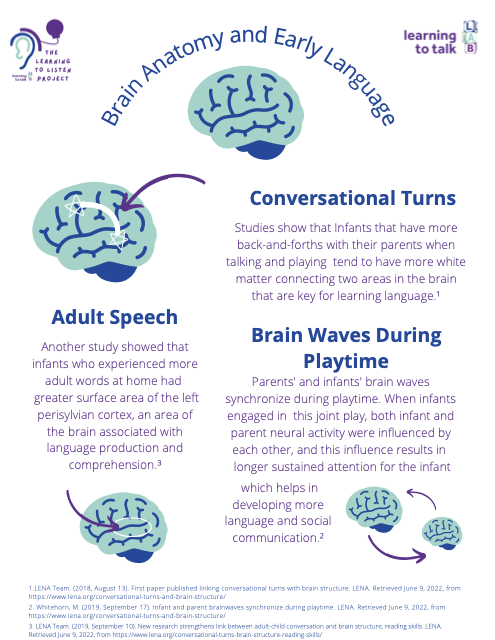 Brain Anatomy and Early Language
About signed languages
Signed languages are complete, natural languages, not just gestures. American Sign Language (ASL) has its own grammar and is different from British Sign Language and other signed languages around the world. Early exposure to a signed language supports language development and cognitive growth in deaf children.
Emory, K. (2023). Current Directions in Psychological Science, 32(5), 387–394.
Resources and help
Early Start
California's early intervention program for families with children who are d/Deaf or hard-of-hearing, or who have developmental delays.
LEAD-K Family Services
California's center connecting families to local services, schools, coaches, and support.
California Hands & Voices
Supports children who are d/Deaf or hard-of-hearing and their families, whatever communication method they use.
Questions? Email us at spoglabstanford@stanford.edu or call (323) 639-0119.